
Expert voices.
In one place.
Talks, debates and conferences from Think Tank The Company — watch and listen to our experts.
How to Acquire Foreign Companies and Overcome Capital Barriers?
Do Polish mid-sized companies have a chance to become global players and effectively acquire foreign entities with years of tradition? Jakub Nowak, CEO of JNT Group, shares his experience in carrying out foreign acquisitions and building a strong position for Polish business around the world. From the interview you will learn how to break the barrier of a lack of courage in international acquisitions. An example is JNT Group's decision to buy a Spanish producer of sparkling wine, the second oldest in the country, with almost 150 years of tradition. This move opened the door to 30 markets for the company and showed that foreign M&A transactions are not reserved exclusively for Western corporations. The conversation also touches on financial challenges and the loophole in the system because of which Polish and foreign banks refer entrepreneurs back to each other. Hence the postulate of a fund that would finance the international expansion of Polish companies.
Play
How to Unlock the Potential of the Polish Economy?
Can Polish entrepreneurs, despite absurd bureaucracy and a lack of trust from public offices, build the second strongest economy in Europe in the future? Anna Pawelak (Elplast+), in an interview given during the launch of the Entrepreneurial Poland programme, shares her experience and points out the barriers that domestic business faces every day. The interview also addresses the gap in the state support system, in which grants and assistance end at the stage of medium-sized companies. Closing the door on the largest players forces them to cope on their own, which drastically reduces their chances of successful international expansion and building global brands. Watch the full interview with Anna Pawelak and find out what Polish business needs today to overcome bureaucratic obstacles and make full use of its courage and creativity.
How to Build a Strong “Made in Poland” Brand Abroad?
As part of the launch of the “Entrepreneurial Poland” programme, we talk to Dr. Małgorzata Adamkiewicz of Adamed about internationalisation — Polish companies entering foreign markets. This is one of the four pillars on which Think Tank The Company bases its activities. Today only 4–5% of Polish companies export, and 1% of companies account for half of Poland's exports. According to Małgorzata Adamkiewicz, companies that want to be stable and resilient to geopolitical turbulence must go beyond the Polish market of 38 million people and look for customers in Europe and Asia. It will be easier for them if a strong “Made in Poland” brand is recognisable abroad. The conversation also features a figure few people know: Polish entrepreneurs generate 75% of GDP. And yet the image of the entrepreneur in Poland is still weak, which is why Think Tank The Company wants to build the brand of the Polish entrepreneur both at home and in foreign markets. Watch the full conversation and find out what Polish companies need to enter foreign markets effectively.

How to Go from a One-Person Business to an International Brand?
As part of the launch of the “Entrepreneurial Poland” programme, we talk to Rafał Chrapkowicz, CEO and co-founder of the Pako Lorente brand. The entrepreneur shares his 20 years of experience in building a business that has come a long way from a one-person operation to a company employing several hundred people and operating in 8 European markets. In the interview you will learn how unpredictable law and lack of support for expansion are blocking the development of Polish SMEs. We also discuss the Pako 2.0 transformation. Rafał proves that ChatGPT alone is far from enough today, and suggests how to wisely implement AI into all processes to turn team resistance into increased efficiency for the entire company. This is essential viewing for every business owner looking for hard data and proven solutions for effectively scaling a business in international markets.

Why Don't Poles Want to Start Businesses? On Ethos, Risk and Shaping Reality with the Founder of G2A
Only 3% of people in Poland say they want to build their own business. This figure shows how urgently we need to rebuild the ethos of the entrepreneur and change the social narrative around starting companies. Where does such low willingness to start a business come from? In a conversation during the launch of the “Entrepreneurial Poland” programme, Bartosz Skwarczek, founder of G2A, says that one of the main causes is the prevalence of a “half-truth narrative” and harmful myths that have grown up around Polish business. The creator of G2A, a platform that today reaches 35 million customers in 180 countries, openly points out the selective image of Polish entrepreneurship. He notes that headlines about luxury purchases by business owners get much more attention, while years of risking personal assets, building factories, creating thousands of jobs and paying taxes in the country are completely ignored. He also stresses that the conditions for running a business in Poland should not be compared with the past, but with our real, current competition: for example the USA or Shanghai. Despite all these challenges, Bartosz Skwarczek has no doubt: if he had to start from scratch, he would choose Poland again. Watch the full interview and discover what building a global brand really means — and how together we can rebuild the ethos of the Polish entrepreneur.

What Do Polish Entrepreneurs Need Today to Change Poland?
Research shows that historically we are one of the most distrustful nations. This lack of trust has blocked our potential and real change for years, also in business and economic policy. In our latest interview, Rafał Płuciennik explains where this phenomenon comes from and what is finally making things start to change. Over the last 6 years, Rafał and the The Company team have brought more than 2,500 Polish entrepreneurs to one table, moving from talking about problems to developing concrete solutions. Polish business is ambitious, bold and still hungry for success. To fully unlock this potential, we need one thing: space to act together. Watch the full episode and discover why trust between entrepreneurs, experts and the state is today the most valuable asset of the Polish economy!

Business and the State: From a "Marriage of Transitions" to a Strategic Partnership
Is dialogue between the Polish government and entrepreneurs still possible? Adam Malinowski, CEO of Think Tank The Company, describes this relationship as a "marriage of transitions". He stresses, however, that shared successes such as the SprawdzaMY deregulation project prove that cooperation works. Yet to permanently unlock the potential of Polish companies, concrete systemic reforms must be implemented. Complicated taxes (filing a CIT declaration in Poland takes about 52 hours, compared with just 5 in Estonia) and investment processes dragging on for years are today's biggest brakes on our development. In an interview during the launch of the Polska Przedsiębiorcza programme, Adam Malinowski explains the assumptions of an 18-month roadmap for the Polish economy. He talks about cooperation with SGH on a new Estonian CIT law, plans to complete deregulation, and the great need to rebuild the ethos of the entrepreneur. We want Polish business to stop feeling alienated in its own country and to be appreciated for its global successes. Watch the full episode and discover how Think Tank The Company plans to revolutionise the conditions for doing business in Poland!

The Future of Polish Transport: How to Defend Europe's Leading Position?
Will Poland lose its position as the European leader in the transport industry to the Baltic states? Although the logistics sector is one of the main pillars of Polish GDP, rising labour costs and outdated legal barriers are increasingly limiting the growth of domestic companies in the international market. Tomasz Macherowski of Grupa Transportowa analyses the biggest development barriers facing Polish business and explains why the state should support entrepreneurs rather than make things harder. The conversation shows how essential digitalisation and simplification of administrative and customs procedures can strengthen our competitiveness. Watch the full episode and discover what changes Polish transport needs to maintain its strong position in Europe!
Polish Critical Infrastructure: The Key to the G20 and Real Defence
Can national security and Poland's international standing rely on foreign contractors? Mariusz Górecki, CEO of AtlasWord, answers unambiguously: the foundation of state security is local engineering competence. In the face of the geopolitical situation, energy transformation and rapid development of artificial intelligence, investments in secure shelters, power and large servers are an absolute priority today. In the interview, Górecki explains why building Poland's critical infrastructure by domestic entities ensures its availability in the event of a military threat. He also describes how AtlasWord uses its 27 years of industrial experience and technology partnerships (including with Finnish leader Temet) to carry out strategic projects in Poland and Europe. Find out why an efficient dialogue between business and state administration within Think Tank The Company is key to maintaining Poland's position in the G20. Watch the full episode and discover why a strong Polish industry is the only guarantee of real security!

University and a Full-Time Job Instead of Your Own Business? Michał Jesionowski on Poland's Succession Crisis
Does the Polish education system prepare young people to build and develop their own businesses? Michał Jesionowski of Jesion Inwestycje says plainly: in Poland there is no systemic teaching of entrepreneurship from the ground up. The current system pushes people toward salaried employment instead of self-employment, so only 3% of young Poles want to start a company, while the EU average is over 25%. In the conversation, Jesionowski explains why the vast majority of domestic companies close when trying to hand power to the next generation. He points to the complicated tax system, the 24/7 work trap and a lack of knowledge about how to build operational structures that do not overload owners. Find out how changing the approach to education and scaling Polish enterprises above PLN 100 million in revenue can genuinely strengthen the whole economy and build a recognizable Made in Poland brand.
The Internet Has Democratized Commerce. Jędrzej Karasek on the Opportunity for Small Brands.
Without a well-managed state, nothing else will move – this is how Jędrzej Karasek explains why a "fast state" is at the top of the SME Council's demands. Karasek, Vice-Chairman of the Council and founder of Primavera Parfum, argues that only a professionally managed administration will open the way to the AI revolution, investments in nuclear energy, and changing the image of the Polish entrepreneur. He also talks about why the internet has democratized commerce and why it is small, flexible companies that now have the advantage over global corporations. Watch the full episode and find out why speed and efficiency of administration, according to Karasek, should come first!

Security Without Polish Companies Is an Illusion. Michał Wypychewicz Explains Why
Can we talk about Poland's energy security without strong, private industrial companies? Michał Wypychewicz, CEO of Koronea Family Office, Chairman of the Supervisory Board of ZPUE, and member of the Business Council at Think Tank The Company, answers directly: no. Without own technology and own companies in energy and defense, the country's security becomes an illusion that builds the economy elsewhere. Wypychewicz also explains how ZPUE went from a small player to a significant company in the European market, pointing to innovation and the ability to anticipate changes in energy as the key to this advantage. Watch the full episode and discover why Wypychewicz considers Polish industrial companies the foundation of the country's security!
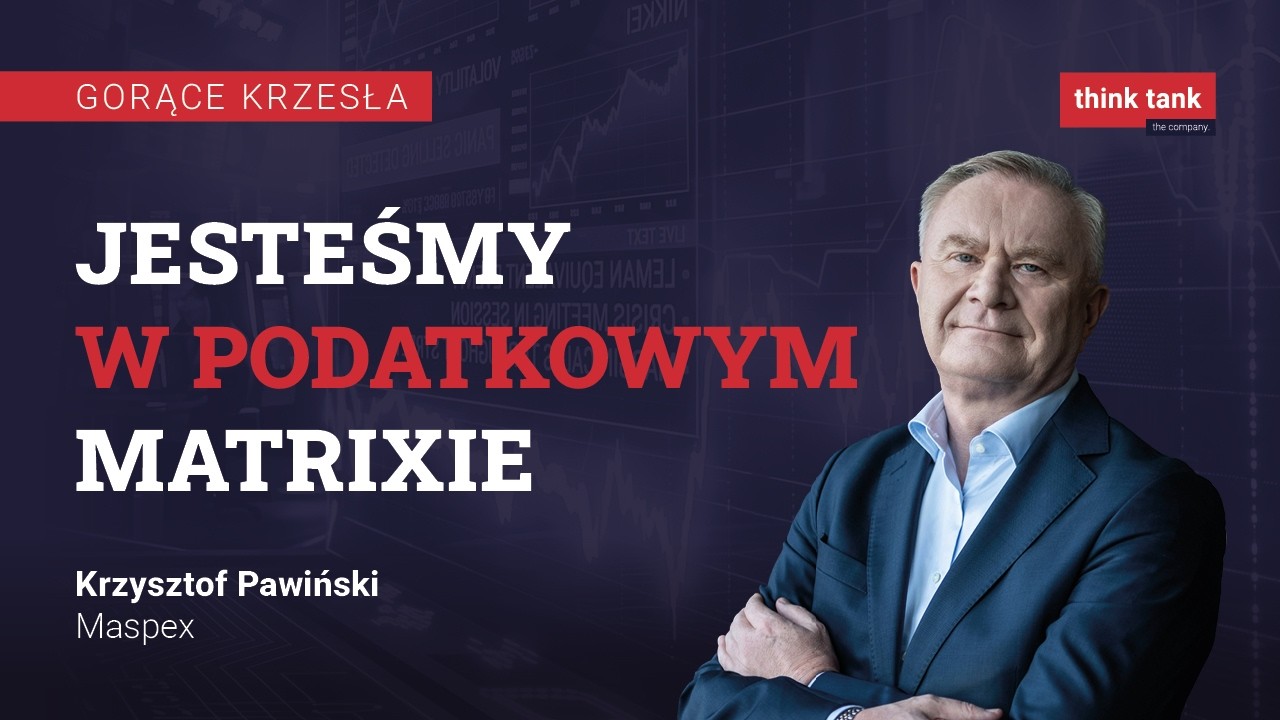
Why Does Tax Settlement Take 50 Hours in Poland and 5 in Estonia?
What exactly is Estonian CIT and why does Krzysztof Pawiński, a member of the Business Council at Think Tank The Company, call the current tax system a "tax matrix"? The starting point is the Nobel laureate James Meade's scientific concept, which Think Tank The Company, together with SGH, wants to adapt to Polish conditions. In practice, it is about a tax on profits retained in a company: the dual tax and balance-sheet accounting disappears, equity stops being treated worse than debt, and enterprises gain a real incentive to invest. Watch the full episode and discover what the path from a tax matrix to a simpler system looks like!
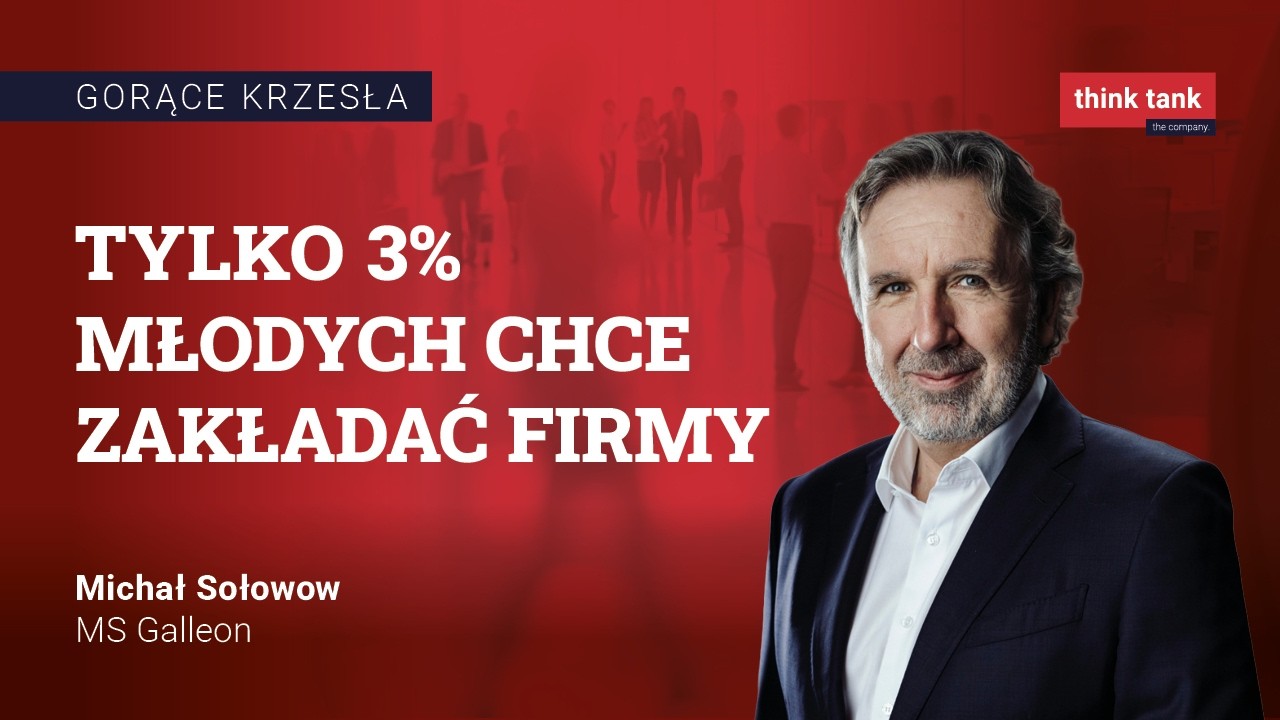
Why Do Only 3% of Young Poles Want to Start a Business? Michał Sołowow Answers
What does it really mean to be an entrepreneur, and why do fewer and fewer young Poles want to take this path? Michał Sołowow, Chairman of the Business Council at Think Tank The Company, believes this is a signal that cannot be ignored. He reminds us who entrepreneurs really are: they organize production and services, hire people, and take full responsibility for their companies without the option to hand in their notice. In Sołowow's view, the recipe for business success is simple but demanding: consistency, discipline, and focus on one's own direction rather than dispersing energy across too many fronts. In his conversation for Think Tank The Company, he also spoke about the AI revolution as the next great opportunity for entrepreneurs, worth entering boldly. Watch the full episode and discover why the future of Polish entrepreneurship depends on whether we can reverse this worrying trend!

Polish Business Wants to Be a Partner to the State, Not a Supplicant
Does the Polish government really treat entrepreneurs as strategic partners? Agnieszka Hipś, CEO of CLIP Group, believes the direction is right, but the road ahead is still long. SprawdzaMY and Deregulacja have shown that dialogue with the administration works and genuinely changes the law, yet Hipś argues that a mechanism is still missing that would let the administration continuously learn about the needs of Polish business. During the inauguration of the Polska Przedsiębiorcza program, Hipś discussed why she joined the Business Council at Think Tank The Company and how Polish entrepreneurs want to co-create a shared platform for governing the country with the government. Watch the full episode and discover what kind of relationship with the state Polish business is proposing!
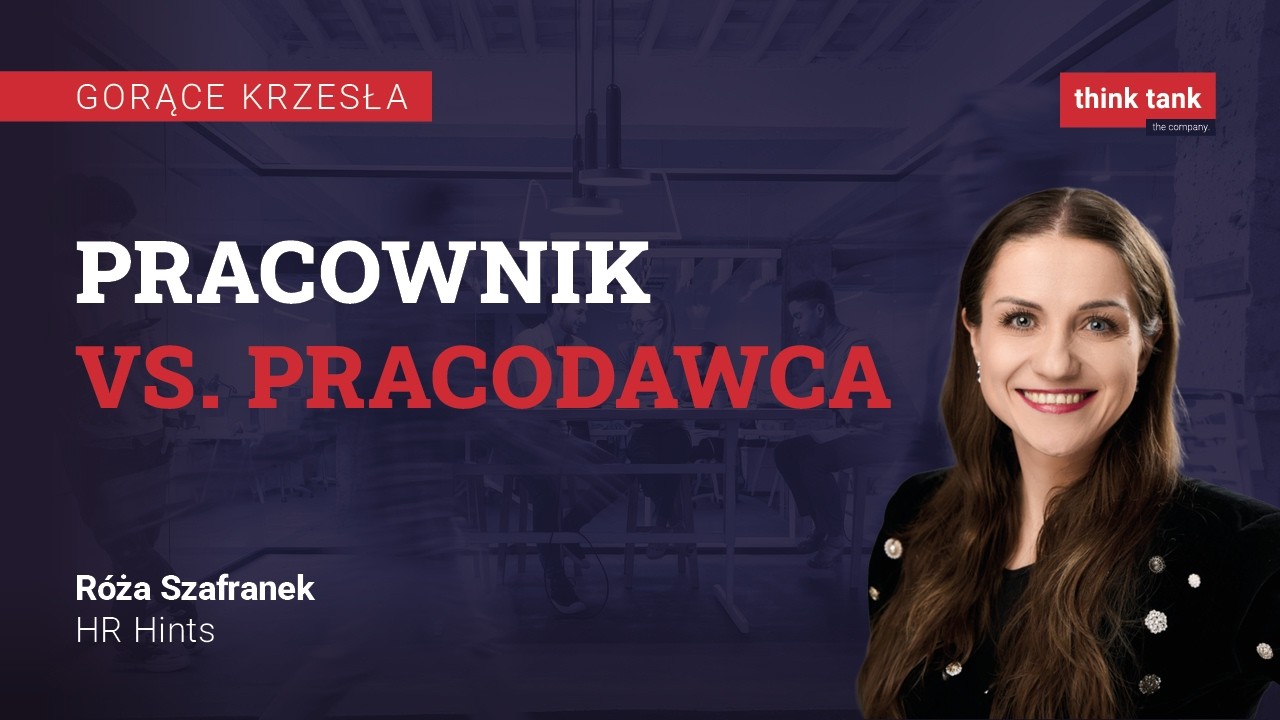
Employee-Employer Relations in Poland as the Key to Modern Company Development
Are Polish companies seeing an artificial conflict growing between employers and employees? Although private entrepreneurs generate most of Poland's GDP and create over 60% of jobs in the country, the image of business owners is still burdened with negative stereotypes. During the inauguration of the Polska Przedsiębiorcza program, Karol Byzdra spoke with Róża Szafranek (founder of HR Hints and member of the SME Council at Think Tank) about tensions in Polish companies, the myth of "exploitation," and market challenges. In the interview, you'll learn why the SME sector must move away from the cheap labor model toward innovation and how shoulder-to-shoulder cooperation builds the success of local business. Watch the full episode and learn how to build better relationships in your company!
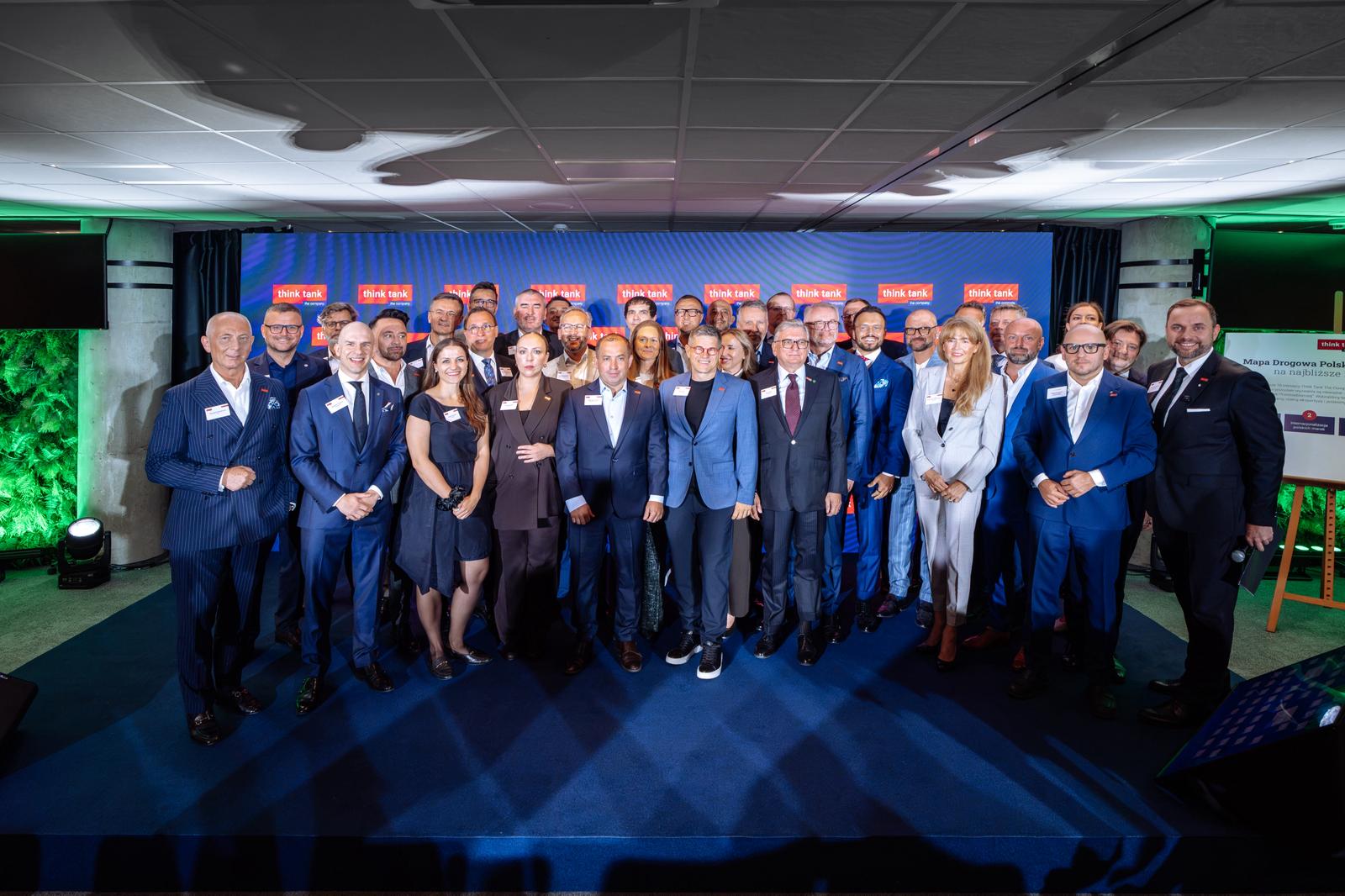
From idea to a change in the law
We don't stop at diagnoses. We've shown that data-driven dialogue can change the law — and that's only the beginning of what we want to build. See what we've achieved so far and where we're heading.