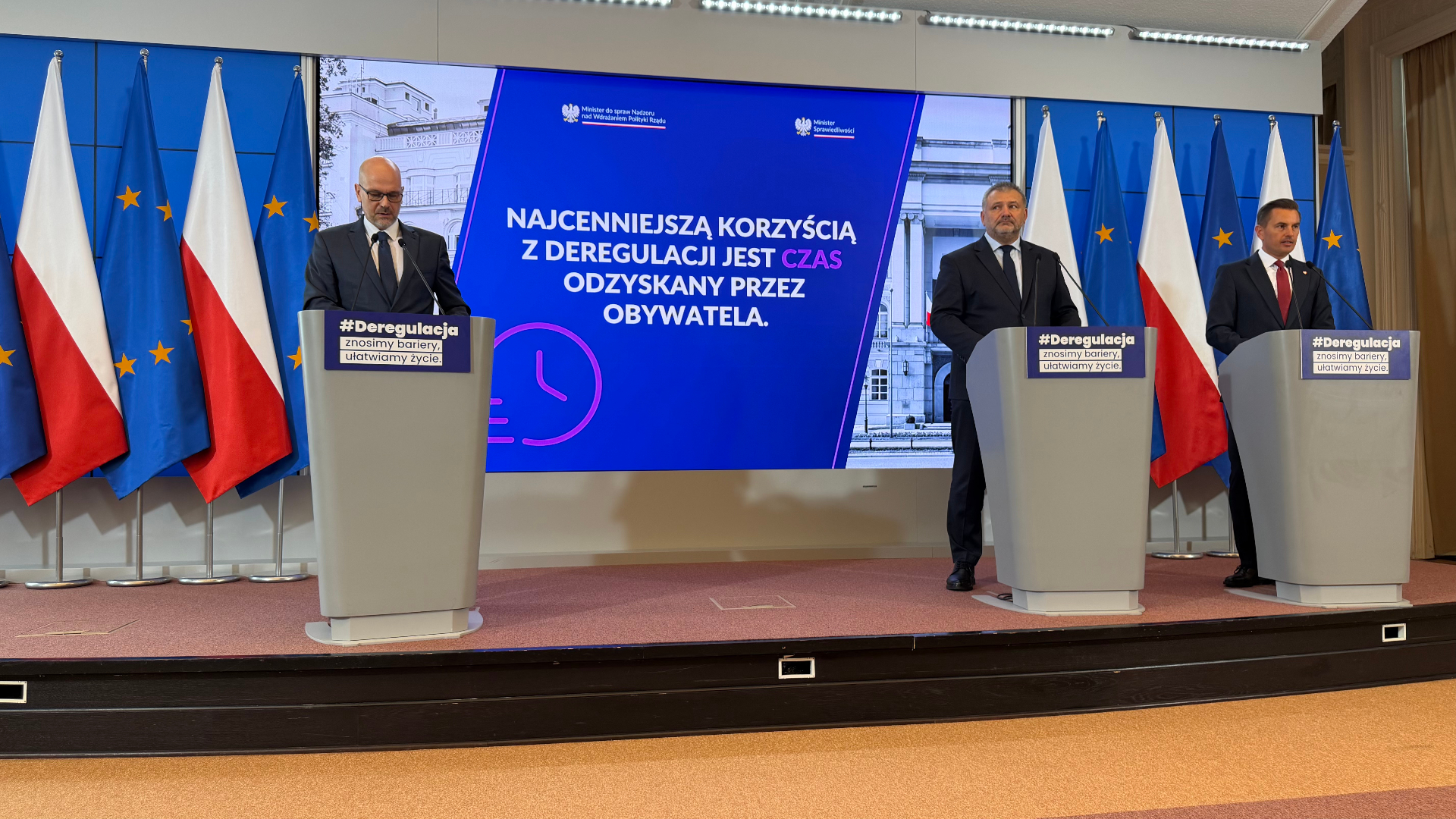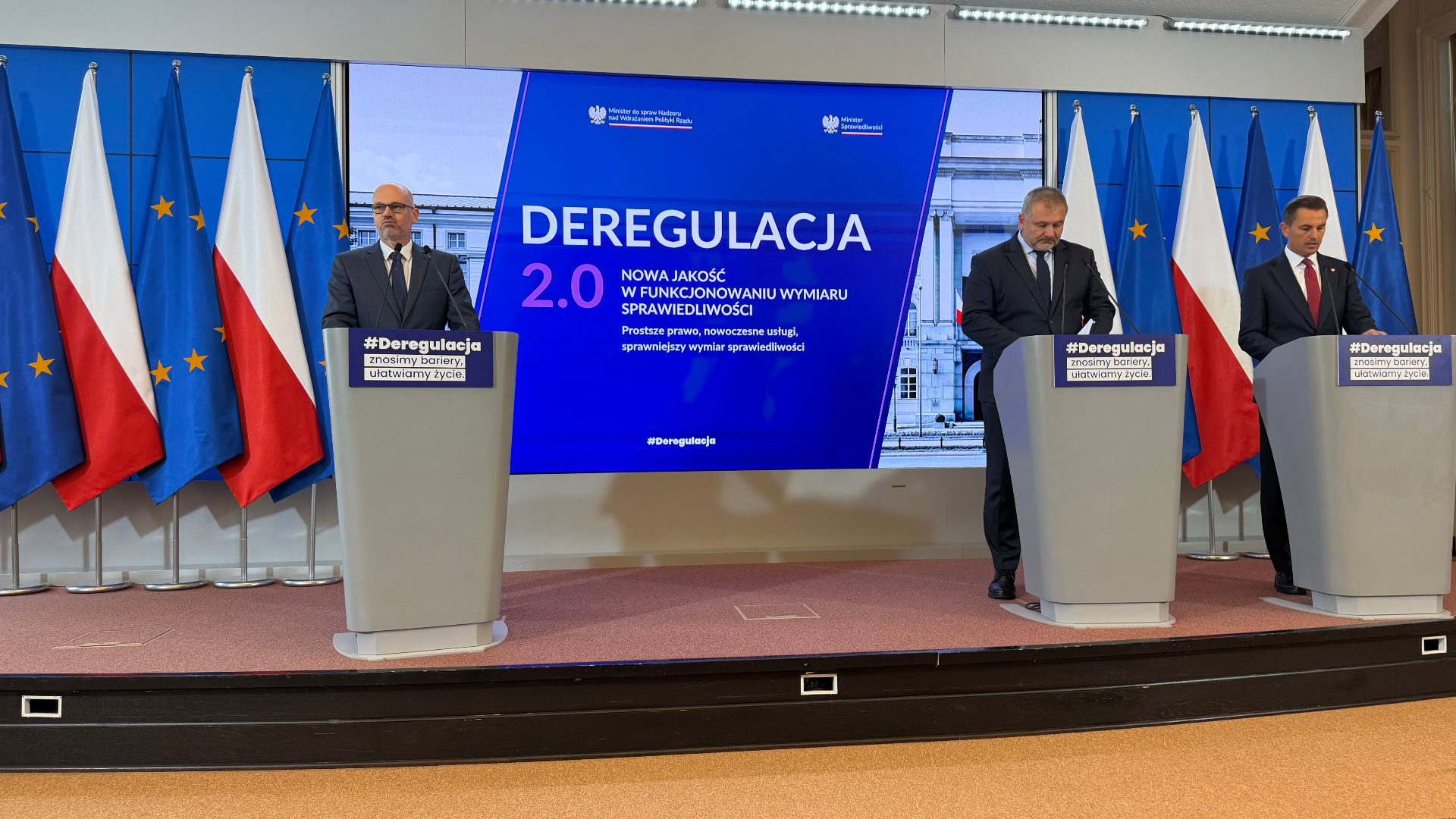
This logic is consistent with the direction SprawdzaMY has pointed to from the outset of the deregulation work: digitalisation together with the simplification of procedures and court organisation is the most effective way to improve the functioning of the state. Organisationally, the implementation of digitalisation is the responsibility of the newly appointed plenipotentiary for the digitalisation of the justice system, Judge Jacek Gołaczyński.
Digitalisation of court services
The package provides for full use of remote hearings and interrogations in criminal cases, with mandatory recording of every action, ensuring the transparency of proceedings. This proposal was submitted by SprawdzaMY back in the first phase of deregulation and has largely already been implemented, although criminal procedure still limits its wider application.
Courts will also gain broader electronic access to public registers, including the Central Register of Vehicles and Drivers and the Financial Information System, with the automatic exchange of data between institutions. This extends the model launched with access to the PESEL and KRK databases in Deregulation 1.0. The systemic principle SprawdzaMY has advocated since the first phase is simple: the obligation to obtain documents already available in state databases should lie with the court, not the citizen.
Digitalisation will also cover criminal proceedings: e-files, e-rulings and electronic communication between the court, the prosecutor's office and parties to proceedings will be introduced. This is a proposal from the second phase of deregulation, mirroring the Electronic Document Management model already widely deployed in public offices.
A separate, first area of full and systemic digitalisation is commercial cases: files will be kept exclusively in digital form, and communication between the party and the court, in both directions, will be exclusively electronic.
A novelty is the Electronic Security Instrument, i.e. the e-promissory note: an electronic alternative to the traditional promissory note, secured by an entry in a central state-run register, a qualified electronic signature or seal and a qualified timestamp. Control over the instrument rests exclusively with the person indicated in the register, eliminating the risk of losing or forging the document. SprawdzaMY submitted this proposal in the first phase; initially rejected as unfeasible, it is now back on the agenda.
Changes also cover land and mortgage register cases, which account for around one third of all court cases in Poland, roughly 5 million per year. Digital land and mortgage register files and integration with ZSIN, the Integrated Real Estate Information System, are intended to speed up land and mortgage register proceedings and simplify the filing of applications. The bill is on the list of governmental legislative work, and the first functionalities are to be launched in 2027. SprawdzaMY has been calling for further expansion of court digitalisation since the first phase of deregulation.
New competences
The reform of the system of court experts comprises two stages. A small amendment will incorporate data on experts, until recently kept in paper form at regional courts, into a single central register (ROBUS); the bill is due to reach the Council of Ministers shortly. A large amendment, still under consultation, will introduce a State Certification Commission and mandatory periodic verification of experts' qualifications. This is a proposal from the second phase of deregulation, responding to one of the main causes of protracted proceedings: the shortage of experts and rates out of step with market realities.
A National Register of Mediators will be established: a central, uniform and free database enabling verification of mediators' specialisations and competences. Mediators' remuneration has already been raised as of February 2026. SprawdzaMY has consistently pointed to the low number of mediators and low rates as barriers to broader use of alternative dispute resolution methods, which are a frequent subject of entrepreneurs' postulates.
Court referendaries will take over further competences from judges — inheritance cases, consumer insolvencies and legal aid — which will simplify document flow and give judges more time for adjudication. This is a proposal from both phases of deregulation: not every case has to reach a judge, and a broader group of persons entitled to decide on motions shortens waiting time for decisions.
Notaries will gain the ability to submit applications for entries in the land and mortgage register regardless of whether the case involves a deed drawn up in their office, together with automatic access to the National Register of Debtors. This is a proposal from the first phase, combining notarial and court obligations in one place for the benefit of citizens.
Organisation of court work
Prosecutors will gain a tool to close less serious criminal cases already at the preparatory stage — the so-called mediation-based discontinuation — possible only in specified cases, provided the perpetrator cooperates, damage is repaired and a settlement is reached with the victim and, where necessary, a payment of PLN 1,000 to 20,000 is made. The bill has completed consultations and the legislative work is planned to be finalised in the coming weeks. Accelerating court proceedings was SprawdzaMY's principal postulate in the second phase of deregulation. If the aims of criminal proceedings and redress for the victim can be achieved without involving the court, that option should be used.
A new, simpler template for the annual report on court activity has reduced its length from around 5,000 to around 1,000 pages, i.e. by 80 percent; the next step is to simplify inspection and visitation reports.
Thresholds for the Value of the Subject of Dispute will be raised: cases up to PLN 150,000 will go to district courts, and the threshold for simplified proceedings will rise to PLN 30,000. This is a proposal from both phases of deregulation: inflation and economic growth should translate into regular increases in subject-matter jurisdiction thresholds, so that courts hear cases they were actually established to handle.
The procedure for obtaining an enforcement clause will be abolished: a final judgment will directly serve as the basis for bailiff action. This proposal from the first phase of deregulation, originally rejected, has now been accepted for implementation.
Citizens receiving social welfare benefits will be exempt from court fees on the basis of the document confirming their entitlement to the benefit alone, without having to prove poverty again before the court. This proposal comes from the first and, in part, the second phase of deregulation; the government has been implementing it for several months and announces further changes.
Summary
The announced package covers proposals put forward by SprawdzaMY in both phases of deregulation and confirms that the digitalisation of court services and the simplification of organisation and procedures remain the most effective path to improving the justice system. SprawdzaMY will monitor the pace and scope of implementation of individual changes and will consistently put forward further systemic proposals in this area.
Gallery