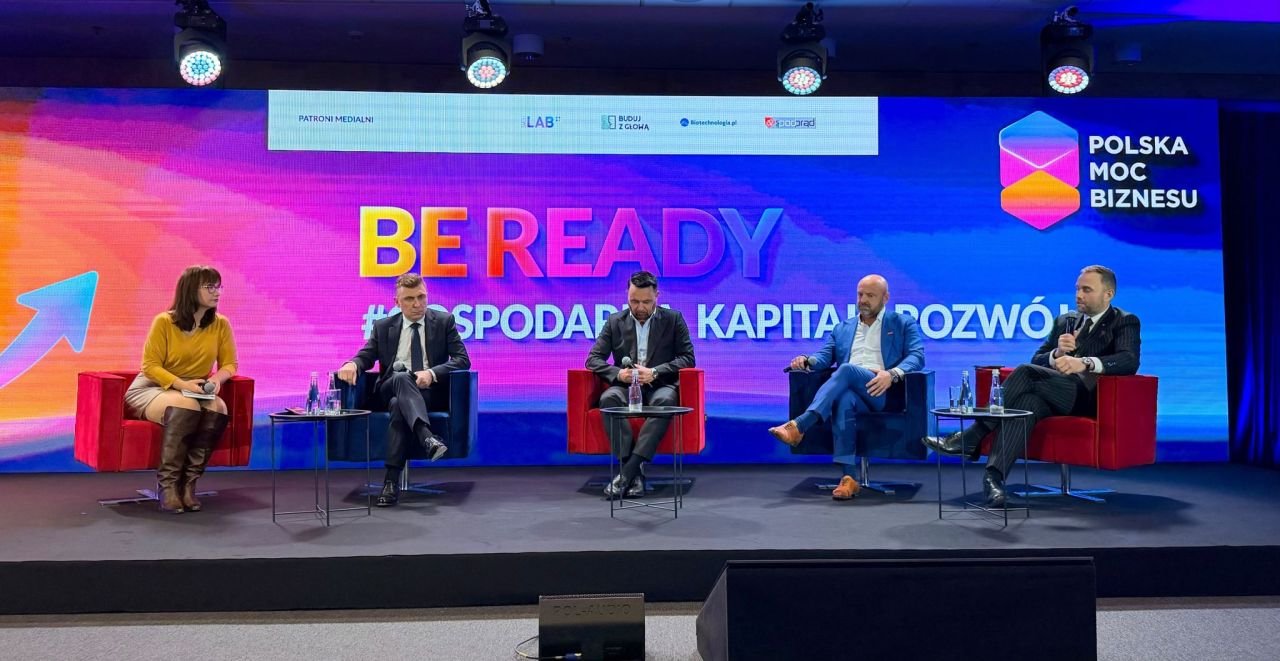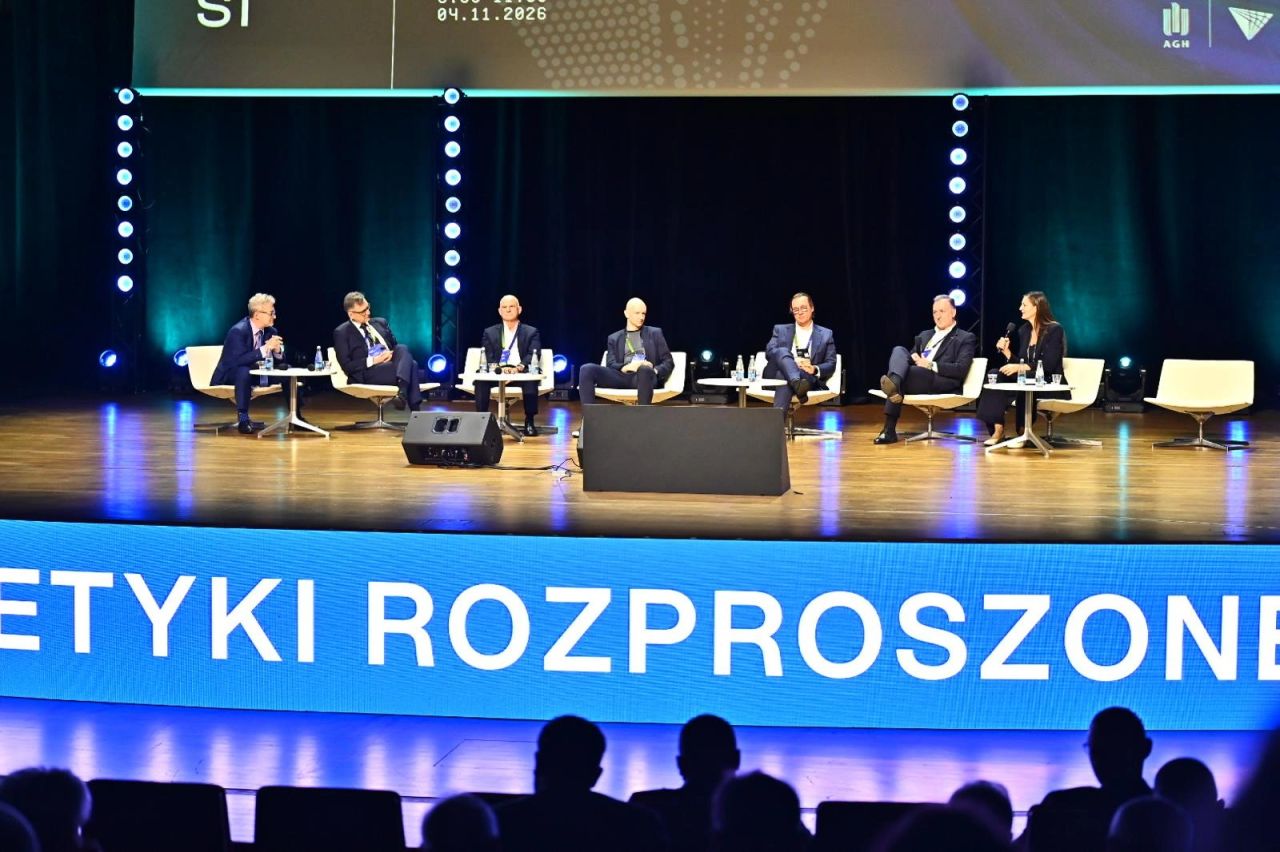
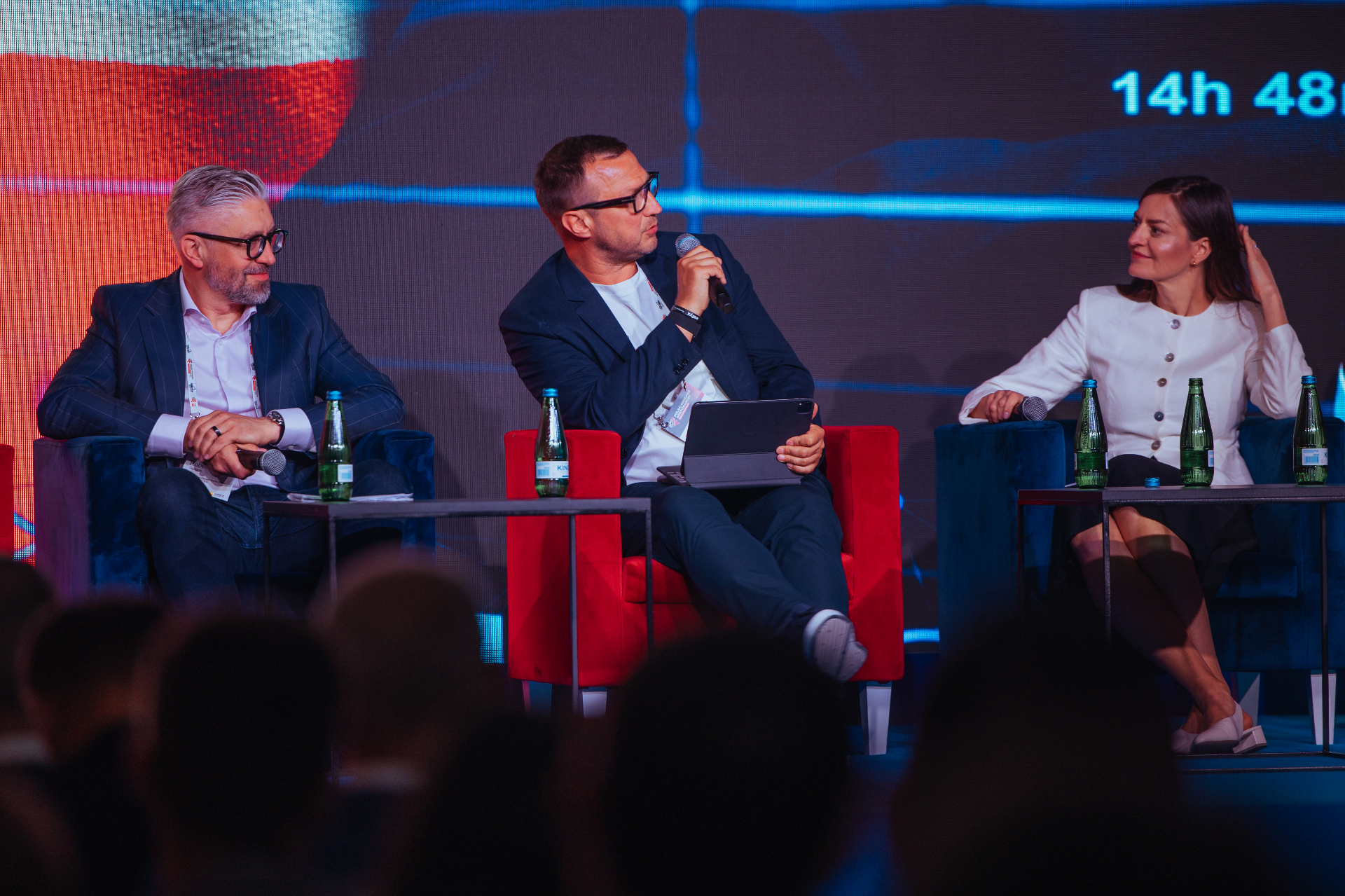
Think Tank The Company was a premium partner of the Polish Economic Congress. Representatives of the think tank took part as panellists in discussions which, although thematically distinct, led to one conclusion: Poland is the 6th economy of the European Union and a G20 member, but economic position is not yet global influence. A coherent narrative is needed to turn hard facts into real impact.
The diagnosis voiced at the congress is precise: we need more investment. Poland invests 17.2% of GDP against the EU average of 21%. The capital market remains underdeveloped, and internal barriers in the EU single market correspond, according to ECB and IMF estimates, to tariffs of over 100% on services and around 40% on goods. Finance Minister Andrzej Domański put it bluntly: "If we want Poland to be among the three most influential economies in the European Union within 10 years, we must bet on investment".
Rafał Brzoska, member of the Business Council of Think Tank The Company, recalled a scale that is too rarely mentioned: nearly 3 million Polish private companies generate 55% of GDP, and together with foreign capital the private sector accounts for 75% of GDP and employs 60% of workers. Polish entrepreneurs are not asking for favours, they want dialogue and partnership. Brzoska indicated the necessary condition for growth in private investment: Poland must become a country where companies can generate cash and reinvest it in R&D, innovation and foreign acquisitions, instead of looking for better conditions elsewhere.
**Brand Poland — a coherent, long-term strategy**
A lot of time at the congress was devoted to the Polish brand. Everyone agreed on the need for a coherent, long-term marketing strategy for Poland, resilient to political change and efficiently executed. Dariusz Gałęzewski, co-founder of OSHEE and member of the Business Council of Think Tank The Company, proposed a concrete institutional mechanism: a marketing director of brand Poland, reporting directly to the Prime Minister, and brand managers in key ministries with measurable KPIs of recognition growth. He referred to the Swiss model, in which the state, 106 years ago, formed an alliance with Novartis, Roche, Nestlé, Rolex and UBS, building the image of Switzerland on the values of precision and reliability. The effect is measurable to this day and can be replicated on the Vistula. Gałęzewski also pointed to a problem visible at the event itself: a discussion of the largest Polish entrepreneurs with the finance minister about the future of the economy was not broadcast by any national television. Polish media do not build entrepreneurial role models, and without them it is hard to expect next generations to want to build companies.
Eliza Kruczkowska, Managing Director of Think Tank The Company, made a declaration on stage on behalf of the organisation: "Think Tank The Company, which represents a community of over 2,500 entrepreneurs, will gladly set those KPIs and moderate this dialogue. We will gladly support all institutions representing Team Poland in building this narrative".
**The Polish entrepreneur as the foundation of the national brand**
The congress also provided an argument hard to ignore in the debate on brand Poland. Michał Sołowow, member of the Business Council of Think Tank The Company, showed in a 1-on-1 conversation that Polish entrepreneurs are today building projects of global reach and strategic importance for the security of the entire Central and Eastern European region. It is precisely such entrepreneurs — their ambition, capital and willingness to take risks — who are the strongest argument that brand Poland has something to lean on. Without their presence in the public and media space, no country promotion strategy will be credible.
Bartosz Skwarczek, founder of G2A and member of the Business Council of Think Tank The Company, confirmed this thesis in a separate conversation. G2A is a company born in Poland, which has never taken any subsidy, and today serves 35 million customers in 180 countries, competing with firms from Silicon Valley and Shanghai from day one. Skwarczek recounted that during a US roadshow investors could not believe that a global market leader had no fund behind it. The answer was simple: they started from Poland, so they did not know it could not be done. Skwarczek admitted bluntly that brand Poland is stronger today than it was, but still not as strong as Polish entrepreneurs would like it to be. Every Polish company that breaks into the global mainstream builds this brand for the next ones, lowering the entry barrier for further Polish entrepreneurs in foreign markets. That is why, as Skwarczek stressed, dialogue between business and state cannot be treated as a privilege but as a systemic condition of growth: the private sector generates 75% of GDP and it is from its taxes that every motorway, every job and every security expenditure is financed.
**A mandate for the coming months**
Think Tank The Company leaves the congress with a clear mandate: to moderate the dialogue between entrepreneurs, development institutions and administration, and to hold its effects accountable against measurable indicators. The next step is the programme conference Rzeczpospolita Przedsiębiorcza (23 June 2026, Warsaw), where the TTC Programme Declaration will be signed — the first formal commitment of the business community to systemic change with an implementation schedule.
**Think Tank The Company at the Polish Economic Congress was represented by:**
**Rafał Brzoska** – Chairman of the Council of Employers of the Republic of Poland, member of the Business Council of Think Tank The Company, panellist of the discussion on the phenomenon of the Polish economy and the partnership between state and business.
**Dariusz Gałęzewski** – Co-founder and owner of OSHEE, member of the Business Council of Think Tank The Company, panellist of the discussion on building the national brand and on the phenomenon of the Polish economy.
**Michał Sołowow** – Entrepreneur, investor, member of the Business Council of Think Tank The Company, 1-on-1 conversation on the Polish entrepreneur as the foundation of the national brand and the driving force of the country's economic development.
**Bartosz Skwarczek** – Founder and Chairman of the Supervisory Board of the G2A Capital Group, member of the Business Council of Think Tank The Company, 1-on-1 conversation on how a Polish company without a single zloty of subsidy became a global leader of the digital market and why a strong brand Poland is a condition for the success of further Polish entrepreneurs in the world.
**Agnieszka Hipś** – CEO of CLIP Group SA, member of the Council of Employers of the Republic of Poland, member of the Business Council of Think Tank The Company, panellist of the discussion "Made in Poland. Stories of companies that changed the rules of the game" devoted to barriers to scaling Polish companies, the role of R&D rooted in Poland with global distribution, and financial instruments supporting companies in a phase of rapid growth.
**Eliza Kruczkowska** – Managing Director of Think Tank The Company, panellist of the discussion on building the national brand and turning economic success into global soft power.
**Adam Malinowski** – Director General of Think Tank The Company, panellist of the discussion on foreign expansion as a condition for further growth of Polish companies.