When Jakub Nowak, CEO of JNT Group, bought a Spanish cava producer, he was looking for more than a winery and a brand — he was buying access to customers. The acquired company’s distribution network gave him entry to more than 30 foreign markets. Building such a presence from scratch would have taken many years.
The hardest part turned out to be financing the transaction. The deadline was tight and the procedures of financial institutions could not keep up with its pace. It is an example of a problem that recurred throughout the meeting: a company may have a proven product, a plan and a foreign partner, and still fail to find support at the moment it needs it.
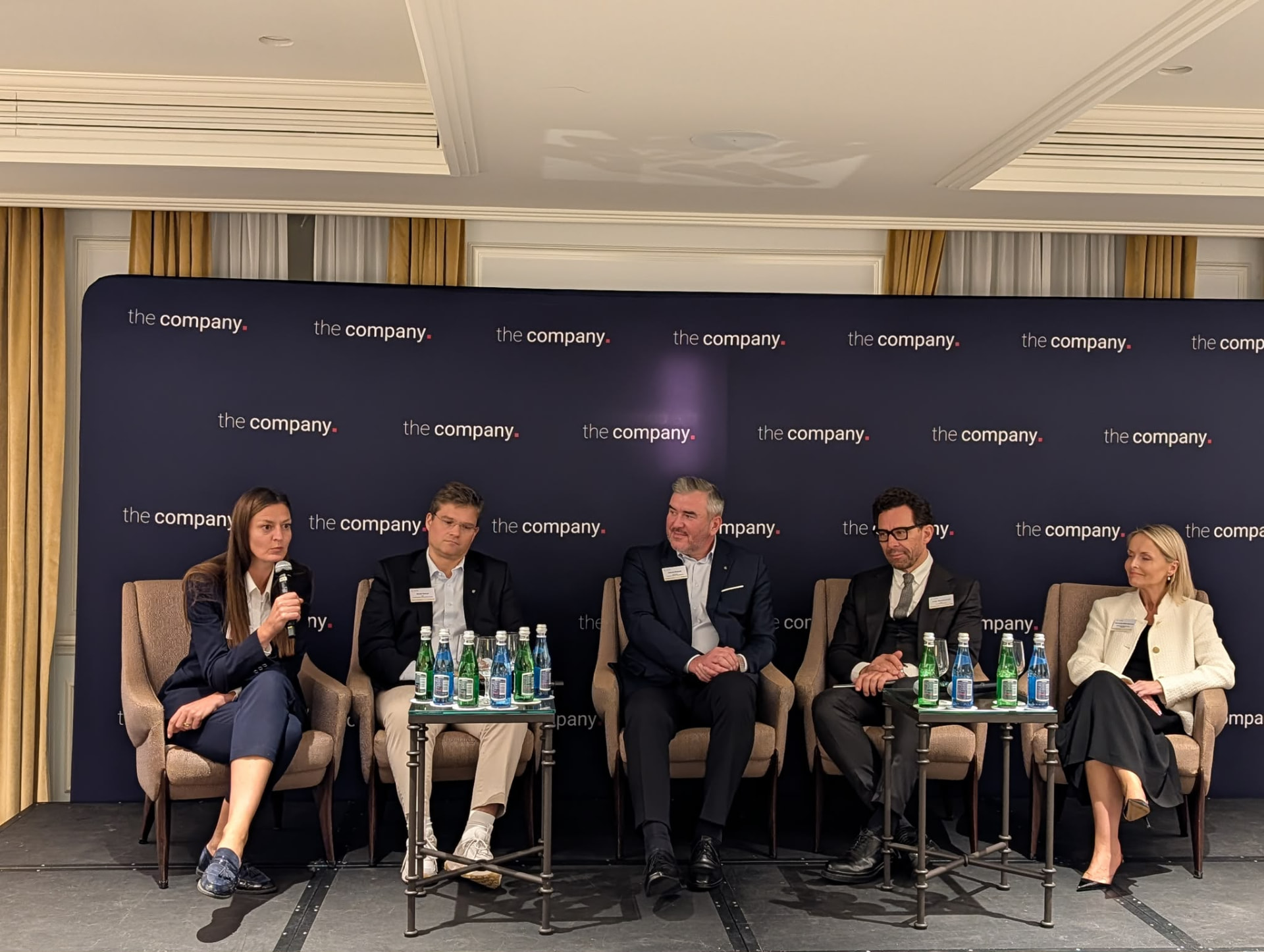
The panel “How to Support Polish Companies in International Expansion” took place on 7 October 2026 during a meeting of the Corporate Connections CC1 Warsaw group. Alongside Jakub Nowak, it featured Marek Gabryś, CEO of AIUT, Artur Osuchowski, CEO of the Polish Investment and Trade Agency, and Agnieszka Sitek-Kobosko of The European Strategy Institute. The discussion was moderated by Eliza Kruczkowska.
Customer first, map later
Marek Gabryś described a different path to international business. AIUT built local competence centres wherever its clients needed them. A foreign presence meant, above all, engineers who could work close to the customer.
His experience yields a simple lesson: an attractive market is one where someone is willing to pay for the company’s solutions. The size of a country or a promise of future growth is not enough. What is needed is knowledge of the customers, an economic calculation and a decision on where to focus the effort.
Both stories also showed that expansion requires patience. Acquiring a company or opening a branch brings new opportunities, but does not guarantee immediate sales growth.
What does a company that already exports need?
The presence of the PAIH CEO made it possible to move from entrepreneurs’ experiences to questions about how institutions operate. The conversation was direct. Companies that already have foreign customers and reinvest their profits expect support matched to their scale and stage of development.
They need contacts with decision-makers, support in talks with foreign administrations and access to business partners. They also point to investment financing and the limits of programmes they fall out of once they exceed the SME category.
Artur Osuchowski pointed to the need to differentiate PAIH’s offering and declared openness to entrepreneurs’ proposals. The discussion brought both critical assessments of the work of foreign trade offices and examples of the Agency’s effective support, including contacts related to the semiconductor sector.
An important question concerned results: how do you know that an economic mission has succeeded? Participants emphasised the need to check what happens after the trip — whether the contacts made lead to contracts, sales and investment.
In Brussels, presence matters before the decision
Expansion is also shaped by regulation. Agnieszka Sitek-Kobosko spoke about the need for a stronger, permanent presence of Polish business in Brussels. Companies and organisations from other countries have been investing for years in representing their industries and taking part in the work on regulations.
Polish companies can use organisations that already operate alongside EU institutions. The condition, however, is cooperation: defining common interests, preparing positions and dedicating resources to representing them. The industry’s voice should appear when the regulations are being written.
From the roadmap to the barriers of specific companies
Internationalisation of Polish brands is one of the four pillars of the “Entrepreneurial Poland” programme, presented by Think Tank The Company in its opening report and 18-month roadmap. The others are: the entrepreneur — ethos and aspirations, energy and competitiveness, and productivity and the Poland of the future.
In the second pillar, TTTC points to the need to build the recognition of Polish brands, connect companies and foster cooperation between business organisations. The October panel gave these directions a concrete dimension: an acquisition deadline in Spain, a local team of engineers, a contact to a foreign decision-maker, or the industry’s position in Brussels.
Polish companies have the ambition and experience to scale up their operations. The conversation showed where better-matched financing and more effective institutions can help them take the next step.